

In This Article
Key Takeaways
- ◆Cerium substitution can reduce the NdPr requirement, but the acceptable composition depends on the magnetic properties and operating conditions of the part.
- ◆The reported N45H diffusion comparison raised Hcj from 17.67 to 26.55 kOe; Br was 13.62 before and 13.61 kGs after treatment.
- ◆The N45H test used a 0.35% Tb surface coating. The 75% Dy reduction belongs to a separate historical 50H example and does not establish finished-part savings.
- ◆Qualify the proposed Ce-containing alloy and diffusion process together. A successful result on a conventional alloy does not establish performance on the substituted material.
- ◆Compare candidates against one agreed drawing and test plan, including the hot demagnetization curve, irreversible flux loss and finished-part cost.
Start with the motor requirements
NdFeB magnet cost can be reduced by replacing part of the neodymium-praseodymium content with cerium, or by using grain boundary diffusion to reduce the heavy rare earth needed for coercivity. Both routes need checking against the actual part. During product development, that comparison belongs before the drawing and material specification are frozen.
Start with the magnet temperature, including short peaks, and the opposing magnetic field it will see under load or fault conditions. Add the flux requirement and available space. Those conditions decide how much remanence and coercivity the material needs. A candidate that looks acceptable at room temperature may lose too much flux when the motor is hot.
Keep the thermal demagnetization requirements in the comparison from the first sample request.

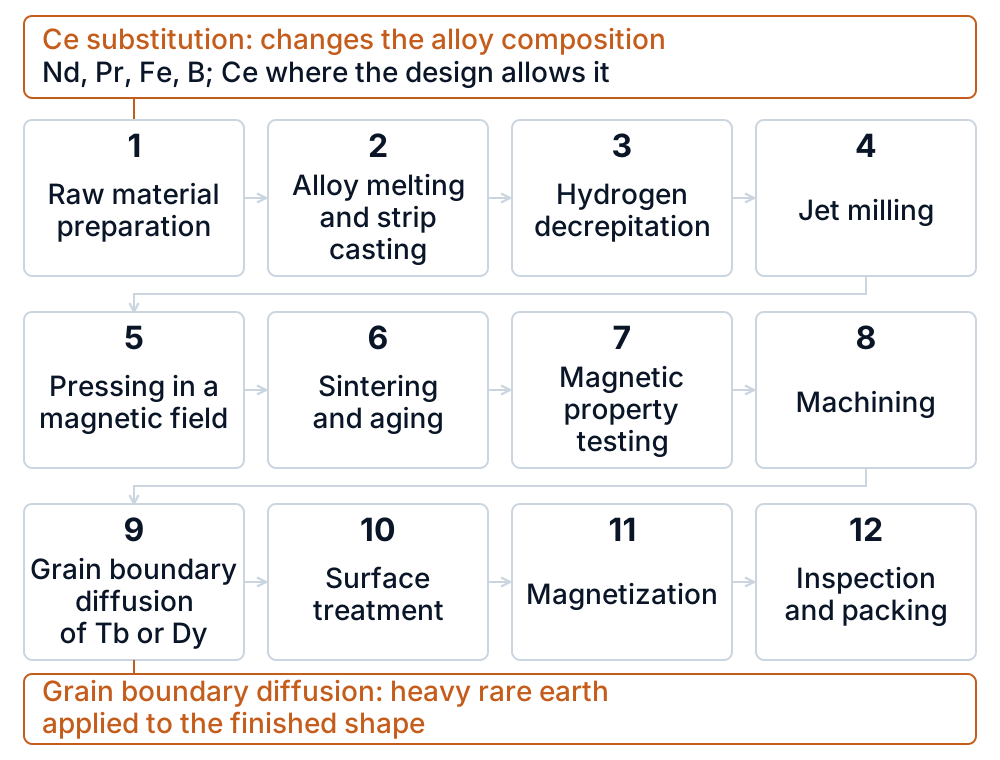
Ce substitution changes the base alloy
Cerium is a lower-cost rare earth that can replace part of the NdPr used in the alloy. The difficulty is retaining the required magnetic properties. Composition and microstructure both matter; the Ce addition cannot be selected from the raw-material price difference alone. Toyota's 2018 magnet development announcement is a useful example.
Its approach combined lanthanum and cerium substitution with grain refinement and a structure that concentrated neodymium near grain surfaces. Toyota also reported that simple substitution caused a decline in performance. That was a specific development programme, with application and production work still ahead at the time of the announcement.
For a buyer, the useful question is whether a proposed Ce-containing material meets the agreed minimum properties in the available geometry. Ask for its demagnetization curves at the relevant temperatures. A Ce addition figure alone gives too little information to approve a material change.
Diffusion reduces the heavy rare earth requirement
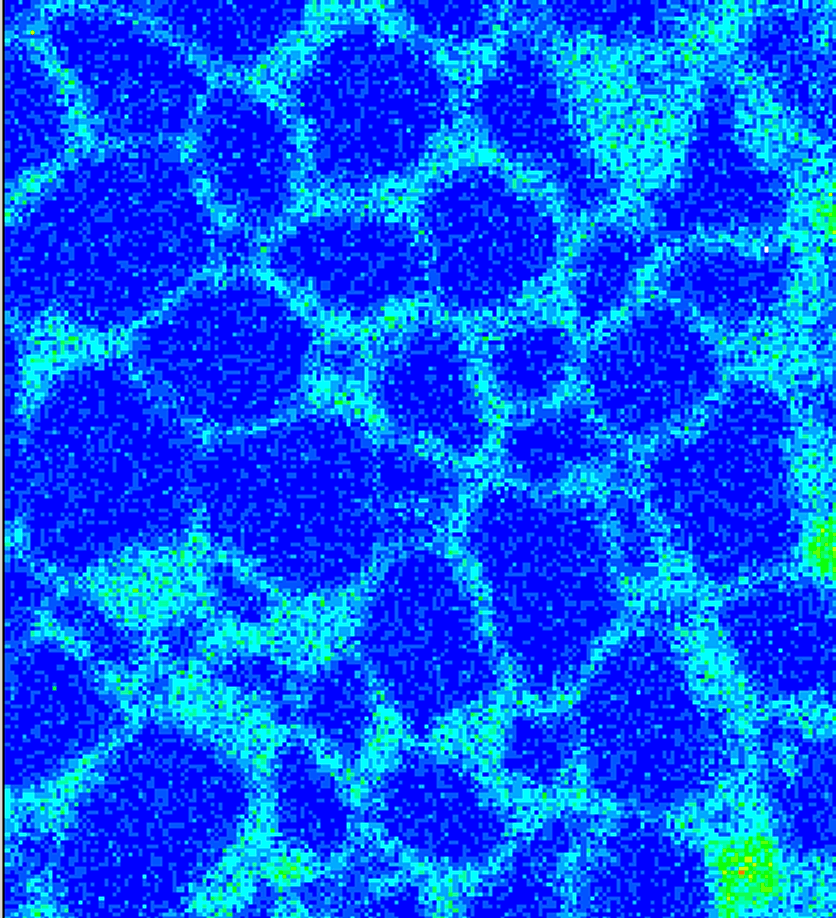
In Dy- or Tb-based grain boundary diffusion, a diffusion source is applied to the magnet surface and heat-treated. The heavy rare earth travels inward along grain boundaries and forms enriched regions near the surfaces of the magnetic grains. This can raise coercivity while limiting the remanence penalty associated with distributing more heavy rare earth through the grains. Shin-Etsu's technical explanation describes this mechanism.
This route is worth evaluating when the required coercivity makes conventional heavy rare earth additions expensive. Its economics include the diffusion material and the extra processing. The final comparison must account for both. Thickness also matters because the treatment enters from the surface.
Research on property variation through a diffused magnet shows why a result on one section cannot be assumed for another. Ask the supplier to confirm the process for the proposed dimensions.
What the reported diffusion comparisons show
The reported N45H comparison used a 0.35% Tb surface coating and reached N45UH-level coercivity: Hcj 17.67 to 26.55 kOe, Br 13.62 to 13.61 kGs and BHmax 45.42 to 45.40 MGOe. Hcj rose about 50% while rounded Br and BHmax were essentially unchanged. A separate historical 50H example reports Dy from 1.2 to 0.3 on the same stated basis, a 75% reduction.
It is a different example, not a current 50H supply offer. The records do not establish combined total-HREE savings or finished-part price savings; a full validation report remains unavailable. These figures support a part-specific comparison. Include Tb input, processing, machining and inspection in the price.
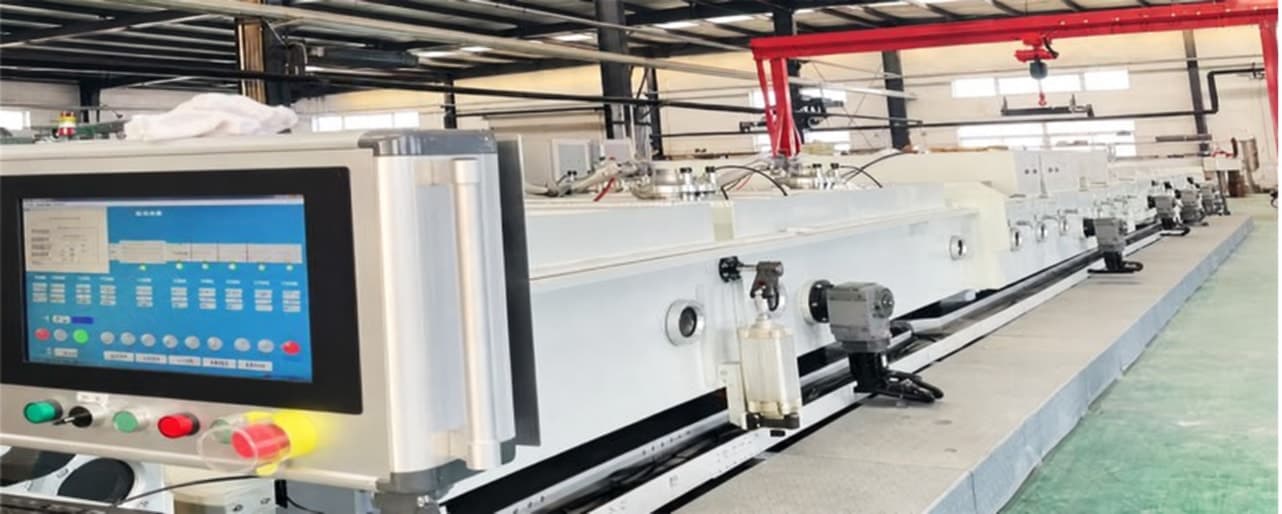
A conventional-alloy result does not establish performance for a Ce-containing alloy. The original plant images and separate routine QC chart shown here do not validate that combination.
Evaluate Ce and diffusion together
Ce substitution and diffusion can be combined, but the diffusion response changes with the base material. Yu and colleagues examined this directly in a 2024 study of Ce-containing magnets treated with Tb-Cu diffusion. The coercivity response varied with Ce content.
At higher Ce contents, phases formed at grain boundaries that obstructed Tb diffusion and consumed Tb. That makes the combined route a material-development question. A diffusion result measured on a conventional alloy cannot simply be carried over to a Ce-containing one. If both routes are being considered, ask for evidence on the actual combination: the proposed base alloy, diffusion source, finished thickness and heat treatment.
Keep the existing material as the reference during testing. Compare Br and Hcj, then measure irreversible flux loss after the agreed thermal exposure. For a motor, the final decision also needs the assembly's performance under its operating conditions.
Compare finished-part cost before design freeze
Engineering and procurement need a common comparison. Request a baseline quotation and suitable alternative routes against the same drawing, quantity and acceptance criteria. Where an alternative needs a geometry change, quote that separately and include the effect on the assembly. Include sample qualification, machining yield, coating, inspection and any additional process lead time.
A saving on alloy input can shrink once those items are counted. Conversely, an alternative that needs modest qualification work may be worth investigating early in a programme with substantial annual volume. To start a cost-reduction review, send Mainrich the drawing and operating requirements. Include the following so the team can assess which route is worth sampling:
- ●Current grade and required Br, Hcj and flux limits, with test temperatures.
- ●Magnet dimensions, tolerances, magnetization direction and coating.
- ●Continuous and peak magnet temperatures, plus exposure duration.
- ●Duty cycle and worst-case demagnetizing conditions.
- ●Prototype quantity, annual volume and target production date.
- ●Permitted material or geometry changes and the qualification requirements.
Frequently Asked Questions
Does adding Ce always make an NdFeB magnet cheaper?
+
Ce substitution can reduce the cost of the rare earth input. Finished-part savings depend on the composition that meets the specification, processing, yield and qualification work. Compare quotations for parts that pass the same acceptance criteria.
Can Ce-containing magnets use grain boundary diffusion?
+
Yes. Published research has tested the combination, but its response depends on Ce content and microstructure. Qualify the proposed alloy and diffusion process together; a result from another material is insufficient.
Does diffusion eliminate the need for heavy rare earths?
+
The Dy- and Tb-based diffusion routes discussed here use heavy rare earths. The reported N45H comparison used a Tb surface coating. Qualify the composition and performance of the proposed part.
Does the Mainrich example establish a fixed saving on magnet price?
+
No. The N45H record reports magnetic properties. Dy reduction belongs to a separate historical 50H example. Neither establishes a fixed saving on a finished magnet price.
What should be checked before approving a lower-cost material?
+
Check the hot demagnetization curves, irreversible flux loss and performance in the intended assembly against agreed limits. Confirm dimensions, coating and production consistency. Include qualification costs in the commercial comparison.
Send the drawing, operating temperatures and annual volume for a magnet cost-reduction review.
Related Reading