
Mainrich International
Market Update11 min readAugust 18, 2026

Rare Earth Market Update August 2026: NdPr Pricing, MOFCOM Licensing, and Western Supply

August broke the July rally. The SMM NdPr oxide benchmark fell 11.9% to USD 97.40/kg on 4 August, dysprosium lost 11.6% and terbium 7.19% on the domestic Chinese assessments, and 13 of the 19 elements SMM tracks closed the month lower. None of that reached buyers outside China. Terbium oxide inside China was quoted near USD 990/kg on 11 August while reported ex-China transactions ran USD 3,625 to 4,500/kg. The number to act on this month is 10 November, which is now closer than the lead time on a licensed heavy-grade order.

Mainrich International

Mainrich International

Engineering Team

rare earth market updateNdPr price August 2026terbium oxide price 2026dysprosium priceMOFCOM export license 2026China rare earth export dataMIIT rare earth quota 2026MP Materials Independence magnetsLynas dysprosium terbiumrare earth procurement
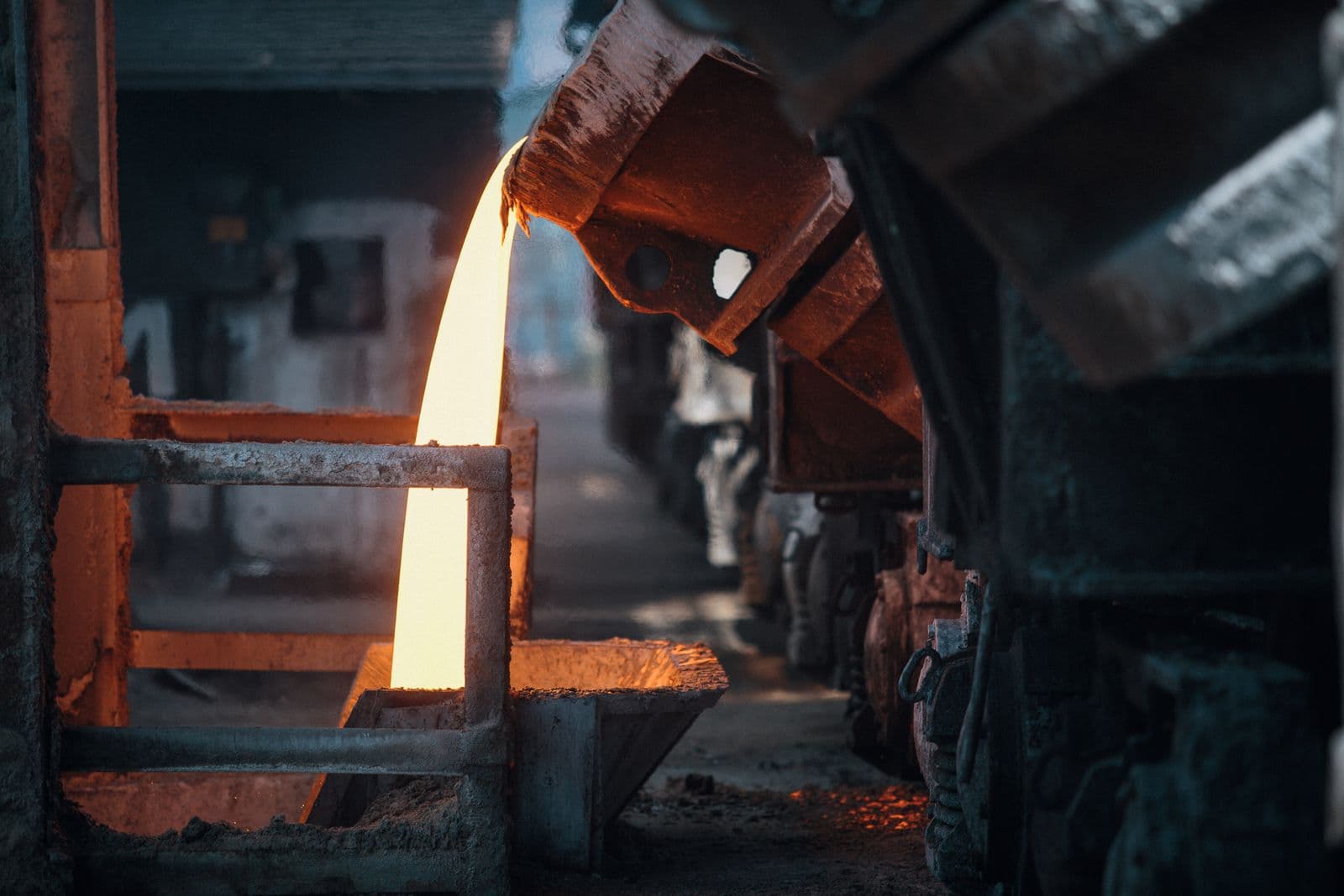
Stream of molten metal pouring from an industrial foundry ladle, with sparks scattering across the pour floor.

Key Takeaways

  • SMM assessed its NdPr oxide benchmark (SMM-RE-OX-001) at USD 97.40/kg on 4 August 2026, down 11.9% from USD 110.55/kg on 2 July and back below the USD 110/kg floor written into MP Materials' US government offtake agreement. The metal side barely moved: on SMM's 3 August assessment, NdPr alloy was USD 133.67/kg (up 0.49% on the month), neodymium metal USD 145.48/kg (down 0.27%) and praseodymium metal USD 154.35/kg (up 3.46%).
  • Heavy rare earths fell inside China. SMM's 3 August assessment put dysprosium at USD 231.35/kg (down 11.6% on the month) and terbium at USD 1,094.68/kg (down 7.19%). Across the 19 elements SMM tracks, 13 fell and 6 rose, with an average change of -5.4% and a median of -9.2%. The China Rare Earth Industry Association index read 260.8 on 11 August, against a March 2026 peak near 310.
  • The fall did not reach buyers outside China. On 11 August quotations, terbium oxide was roughly USD 990 to 999/kg inside China against reported ex-China transactions at USD 3,625 to 4,500/kg, and dysprosium oxide roughly USD 205 to 211/kg domestic against USD 575 to 1,450/kg outside. For a Western buyer, the Chinese domestic print shows which way the market moved. What you pay is set separately, by license availability and supplier position.
  • China exported 4,224 tonnes of rare earths in July 2026, according to General Administration of Customs data released 7 August. That is 29.5% below July 2025 (5,994 tonnes), 17.3% below June, and the lowest month since March. Exports for the first seven months total 34,706 tonnes, down 10% year on year. MIIT still had not published the second-half mining and smelting quota, which normally lands in June or July.
  • MOFCOM added 14 EU entities to its export control list on 24 July 2026, in response to the EU's 21st sanctions package against Russia, which named 14 mainland Chinese and Hong Kong companies. Italian electric motor manufacturer Lafert SpA is on the list. Foreign companies are also barred from supplying listed entities with China-origin dual-use items. Announcement No. 26 of 2026, the violation reporting mechanism, took effect 1 July as scheduled.
  • MP Materials reported Q2 2026 on 6 August with NdPr oxide production of 840 tonnes (up 41% year on year) and still guides first commercial magnet shipments from Independence to Q4 2026. Lynas produced 19 tonnes of combined dysprosium and terbium in its June 2026 quarter. Against that, the suspension of the expanded October 2025 MOFCOM controls expires 10 November 2026, so the practical booking window for Q4 delivery of H, SH, UH and EH grades is closing this month.
01

Where prices actually sit in August

Last month's update left the rally intact, with the only open question being how tight it would get. In August the rally reversed. SMM assessed its NdPr oxide benchmark (SMM-RE-OX-001) at USD 97.40/kg on 4 August 2026, down 11.9% from the USD 110.55/kg print on 2 July, and back under the USD 110/kg floor price in MP Materials' US government offtake agreement.

The metal and alloy references barely moved. SMM's 3 August assessment put NdPr alloy at USD 133.67/kg, up 0.49% on the month, neodymium metal at USD 145.48/kg, down 0.27%, and praseodymium metal at USD 154.35/kg, up 3.46%. A falling oxide against a flat alloy usually means the conversion margin absorbed the move, and it is why quoting off a single reference starts arguments with suppliers.

The heavy side gave back more. On the same 3 August assessment, dysprosium fell 11.6% on the month to USD 231.35/kg and terbium fell 7.19% to USD 1,094.68/kg. Across the 19 elements SMM tracks, 13 fell and 6 rose, with an average change of -5.4% and a median of -9.2%. By 11 August the China Rare Earth Industry Association index stood at 260.8, against a March 2026 peak near 310.

  • NdPr oxide (SMM benchmark): USD 97.40/kg on 4 August, down 11.9% from USD 110.55/kg on 2 July
  • NdPr alloy: USD 133.67/kg (up 0.49% MoM); neodymium metal USD 145.48/kg (down 0.27%); praseodymium metal USD 154.35/kg (up 3.46%), SMM 3 August
  • Dysprosium, China domestic: USD 231.35/kg, down 11.6% MoM (SMM 3 August); quoted USD 205 to 211/kg on 11 August CREIA data
  • Terbium, China domestic: USD 1,094.68/kg, down 7.19% MoM (SMM 3 August); quoted USD 990 to 999/kg on 11 August CREIA data
  • China Rare Earth Price Index: 260.8 on 11 August 2026, against roughly 310 at the March peak

Key insight

Two assessments a week apart can differ by 10% in this market. Where a contract indexes to a published series, name the series, the publisher, and the assessment day in the contract itself.

02

Two prices for the same oxide

The August decline showed up in the domestic assessments inside China. Buyers paying the ex-China premium saw none of it. Working from China Rare Earth Industry Association quotations dated 11 August 2026, Rare Earth Exchanges put terbium oxide at CNY 6,600 to 6,660/kg inside China, about USD 990 to 999/kg, against reported ex-China transactions at USD 3,625 to 4,500/kg.

Dysprosium oxide showed the same shape: about USD 205 to 211/kg domestic against USD 575 to 1,450/kg outside. Yttrium oxide is the extreme case, roughly USD 9/kg domestic against USD 1,100 to 1,575/kg ex-China. Our own read: The Chinese domestic print is the number the trade press reports and the number that moved in August, but very few Western buyers ever transact at it.

What a European or US buyer pays is set by license availability and by who is holding allocated material, through bilateral deals that get published nowhere. An 11.6% fall in the Chinese dysprosium assessment does not turn into a lower quote from your supplier. Read the domestic series as a signal about Chinese inventory and quota policy, and price your own contracts off what your supplier can license and ship.

03

Policy: a second export list, and the November date

MOFCOM Announcement No. 26 of 2026 came into force on 1 July as scheduled, so the reporting and reward mechanism for suspected strategic-mineral export control violations has been live for six weeks. Nothing published since suggests it has been softened. The new action came on 24 July 2026, when MOFCOM added 14 EU entities to its export control list, responding to the EU's 21st sanctions package against Russia, which had named 14 mainland Chinese and Hong Kong companies.

Chinese suppliers may not ship dual-use items to the listed entities, foreign companies may not supply them with China-origin dual-use items either, and ongoing transactions had to stop immediately. Lafert SpA, an Italian electric motor manufacturer, is on the list. The date that matters more is 10 November 2026.

MOFCOM and GAC Announcement No. 70 of 2025 suspended the expanded October 2025 controls, Announcements Nos. 55 to 58, 61 and 62 of 2025, until 10 November 2026, now under three months away. Add license processing on top of normal production lead time for H, SH, UH and EH grades and the practical booking window for Q4 delivery has closed or is closing this month, depending on your supplier's license position.

On the US side nothing moved: the 25% Section 301 rate on permanent magnets under HTS 8505.11.00 has applied since 1 January 2026, on top of the 2.1% standard duty. Landed-cost models built before January are still wrong.

Key insight

The 24 July listing binds foreign companies, not only Chinese exporters. If you resell or integrate China-origin controlled material, screening your own customer list against the MOFCOM control list is now part of the job.

04

Chinese supply: exports at a four-month low, quota still unpublished

China exported 4,224 tonnes of rare earths in July 2026, according to General Administration of Customs data released on 7 August. That is 29.5% below the 5,994 tonnes shipped in July 2025, 17.3% below June, and the lowest monthly figure since March. For the first seven months of 2026, exports total 34,706 tonnes, down 10% year on year.

Imports ran the other way, 9,451 tonnes in July and 63,323 tonnes year to date, down 5.5%. Reporting attributed the July drop to a summer lull after second-quarter stockpiling, and that is probably most of it. Volume fell at the same time as price, which points at a pause on the buy side rather than any loosening of supply.

MIIT still had not published the second-half mining and smelting quota as of early August. It normally lands in June or July. Silence past that window is the largest unresolved item in the market. A generous allocation would confirm the August pullback. A flat or delayed one keeps the deficit case alive into 2027 planning.

05

Western supply: the first commercial shipments are a Q4 event

MP Materials reported Q2 2026 results on 6 August. Revenue was USD 108.5 million, NdPr oxide production reached 840 tonnes, up 41% year on year, and total rare earth oxide production was 11,072 tonnes. The magnetics segment produced USD 16.5 million of revenue, down 17% year on year, as Independence in Fort Worth converts from precursor work to magnet production.

Magnets have gone to General Motors for in-vehicle qualification and regulatory testing, and the company still guides first commercial magnet shipments to Q4 2026. Lynas reported its June 2026 quarter on 22 July: gross sales revenue of AUD 288.9 million, up 70% on the same quarter a year earlier, total rare earth oxide production of 3,481 tonnes, NdPr production of 1,857 tonnes (down from 1,996 tonnes), and 19 tonnes of combined dysprosium and terbium.

Nameplate on the Malaysian heavy circuit is 240 tpa dysprosium and 50 tpa terbium if feedstock allows, the cost of that expansion has gone from about AUD 180 million to AUD 294 million, and first gadolinium is now guided to early FY28. The other Western projects are further from volume.

  • Neo Performance Materials: Narva, Estonia was still shipping qualification samples with no material commercial magnet volume in Q2 2026; two or three programs expected to enter commercial production during the year, against a Phase 1 target of 2,000 tpa
  • e-VAC Magnetics: Sumter, South Carolina scaling through 2026; Energy Fuels agreed in June 2026 to acquire parent Vacuumschmelze for about USD 1.9 billion, expected to close in early 2027
  • Carester: the Caremag plant at Lacq, France still targets a late 2026 start toward 600 tpa of dysprosium and terbium oxides
  • HyProMag: Pforzheim, Germany recycling plant opened April 2026 at roughly 100 tpa, planned to scale toward 350 tpa
06

What to do in the next 30 to 60 days

Four things. First, do not read the August pullback as a buying window for heavy grades. The number that fell is the Chinese domestic assessment, and unless you buy inside China you do not transact against it. If your supplier offers relief on dysprosium or terbium loading this month, take it. Do not plan next month's budget around getting it again.

Second, close out Q4 heavy-grade orders now. The 10 November expiry sits inside license plus production lead time for most H, SH, UH and EH grade orders. Ask your supplier one direct question: does this part ship under a MOFCOM general license, and can I see the license reference? A supplier who cannot answer within a day has a lead-time problem they have not told you about.

Third, cut the heavy loading where the application allows it. Terbium at roughly USD 1,000/kg inside China and three to four times that outside it decides whether a high-temperature grade is affordable. Grain boundary diffusion is the direct answer. The factory-verified case takes an N45H to N45UH coercivity with a 0.35% terbium surface coating: Hcj goes from 17.67 to 26.55 kOe, Br does not drop, and the process uses 75% less dysprosium than the conventional route.

Fourth, reprice on the right reference. NdPr oxide is down 11.9% on the month while NdPr alloy is up 0.49%. If your contract indexes to oxide and your supplier quotes off alloy, August is the month that argument surfaces. Fix it in writing before Q4 volumes land, and send us the spec if you want a second read on a specific grade.

Key insight

Customer outreach trigger: any account carrying a Q4 requirement in SH, UH or EH that has not placed the order should get a call this week. The 24 July entity listing is also a clean, non-alarmist reason to ask whether they have screened their own customer list.

07

What to watch in September

The MIIT second-half quota, whenever it appears. It is past its usual June or July window and it is the one number that settles whether August was a pause or a turn. Any signal on the 10 November suspension: an extension has historically been telegraphed weeks ahead, and silence into late October should be read as the controls returning rather than as reassurance.

MP Materials' first commercial magnet shipments from Independence, guided to Q4. That is the first non-Chinese volume magnet supply into a US automotive program, and whether it lands on time matters more for 2027 planning than any single price print. And whether the ex-China heavy premium narrows. If Chinese domestic dysprosium and terbium keep falling while ex-China quotes hold above USD 3,000/kg for terbium, the two markets have decoupled properly, and Western pricing stops being a function of Chinese spot at all.

FAQ

Frequently Asked Questions

What is the current NdPr price in August 2026?

+

SMM assessed its NdPr oxide benchmark (SMM-RE-OX-001) at USD 97.40/kg on 4 August 2026, down 11.9% from USD 110.55/kg on 2 July. The metal and alloy references held roughly flat over the same period: SMM's 3 August assessment put NdPr alloy at USD 133.67/kg (up 0.49% on the month), neodymium metal at USD 145.48/kg (down 0.27%) and praseodymium metal at USD 154.35/kg (up 3.46%). Oxide and metal are different products with a conversion margin between them, so check which reference your supplier quotes against before comparing numbers.

Did rare earth prices fall in August 2026?

+

Inside China, most of them did. On SMM's 3 August 2026 assessment, 13 of the 19 elements tracked fell and 6 rose, with an average change of -5.4% and a median of -9.2%. Dysprosium was down 11.6% on the month at USD 231.35/kg and terbium down 7.19% at USD 1,094.68/kg. Erbium oxide was one of the gainers at USD 81.69/kg, up 17.6%. The China Rare Earth Industry Association index read 260.8 on 11 August 2026, against a March 2026 peak near 310. Prices outside China did not follow the same path.

Why are dysprosium and terbium cheaper in China than outside it?

+

Because they are effectively two separate markets. On 11 August 2026 quotations, terbium oxide was about USD 990 to 999/kg inside China against reported ex-China transactions at USD 3,625 to 4,500/kg, and dysprosium oxide about USD 205 to 211/kg domestic against USD 575 to 1,450/kg outside. The gap comes from export licensing under China's April 2025 controls and from how little qualified heavy rare earth material exists outside China. Ex-China deals are also bilateral and unpublished, so there is no single reference price to check a quote against. The practical consequence for a Western buyer is that Chinese domestic prints tell you about Chinese inventory and quota policy, and very little about what you will pay.

What did MOFCOM do in July 2026?

+

Two things. Announcement No. 26 of 2026, which formalizes a mechanism for reporting suspected violations of strategic-mineral export controls, took effect on 1 July as scheduled. Then on 24 July 2026, MOFCOM added 14 EU entities to its export control list in response to the EU's 21st sanctions package against Russia, which had named 14 mainland Chinese and Hong Kong companies. Italian electric motor manufacturer Lafert SpA is among the listed entities. Chinese suppliers may not ship dual-use items to those entities, foreign companies may not supply them with China-origin dual-use items either, and existing transactions had to stop immediately.

When do I need to place Q4 2026 orders for high-temperature magnet grades?

+

This month, if they are not already placed. The suspension of China's expanded October 2025 export controls, granted under MOFCOM and GAC Announcement No. 70 of 2025, runs until 10 November 2026, which is under three months from mid-August. Grades containing dysprosium or terbium (H, SH, UH, EH) need an export license, and that processing time sits on top of normal production lead time. Standard N-grade NdFeB with no heavy rare earth content is not subject to the same friction. The fastest way to cut your lead-time risk is to ask whether your supplier ships under a MOFCOM general license and to ask for the license reference.

Has China published its second-half 2026 rare earth quota?

+

Not as of early August 2026. MIIT normally issues the second-half mining and smelting quota in June or July, and it had still not appeared. That leaves the existing envelope in place and makes the quota the largest open item in the market. A generous allocation would confirm the August price pullback; a flat or delayed one keeps the supply deficit case alive into 2027 budgeting.

When will MP Materials start shipping commercial magnets?

+

The company guided to the fourth quarter of 2026 in its Q2 2026 results, reported 6 August. Magnets from the Independence facility in Fort Worth have gone to General Motors for in-vehicle qualification and regulatory testing. Q2 magnetics segment revenue was USD 16.5 million, down 17% year on year, as the facility converts from precursor work to magnet production. NdPr oxide production reached 840 tonnes in the quarter, up 41% year on year, and capital spending was USD 230.3 million against full-year guidance of USD 500 to 600 million.

How do I reduce dysprosium and terbium exposure in high-temperature grades?

+

Grain boundary diffusion. Instead of alloying heavy rare earth through the whole magnet, the heavy element is diffused in from the surface, where coercivity is actually needed. The factory-verified case takes an N45H to N45UH coercivity using a 0.35% terbium surface coating: Hcj goes from 17.67 to 26.55 kOe, Br does not drop, and the process uses 75% less dysprosium than the conventional route. With terbium near USD 1,000/kg inside China and several times that outside it, that is the single largest cost lever available on a high-temperature grade. It does not suit every geometry, so send the part thickness and duty cycle along with the grade when you ask.

If the August pullback, the ex-China heavy premium, or the 10 November licensing deadline is forcing a Q4 decision, we can help you price it against current data. Mainrich supplies sintered NdFeB from N30 to N58 across three series: F-Series with no heavy rare earth content, conventional N-Series, and D-Series grain boundary diffusion grades. Parts are engineered and quality controlled by our own team through a four-site production network we hold equity stakes in. Quality systems are ISO 9001:2015 and IATF 16949:2016 at the certified plant in our production network, and MOFCOM export licensing is handled in house. Send us the grade, geometry, and operating temperature and you will get a human answer within 1 business day and pricing within 2.

Related Reading